
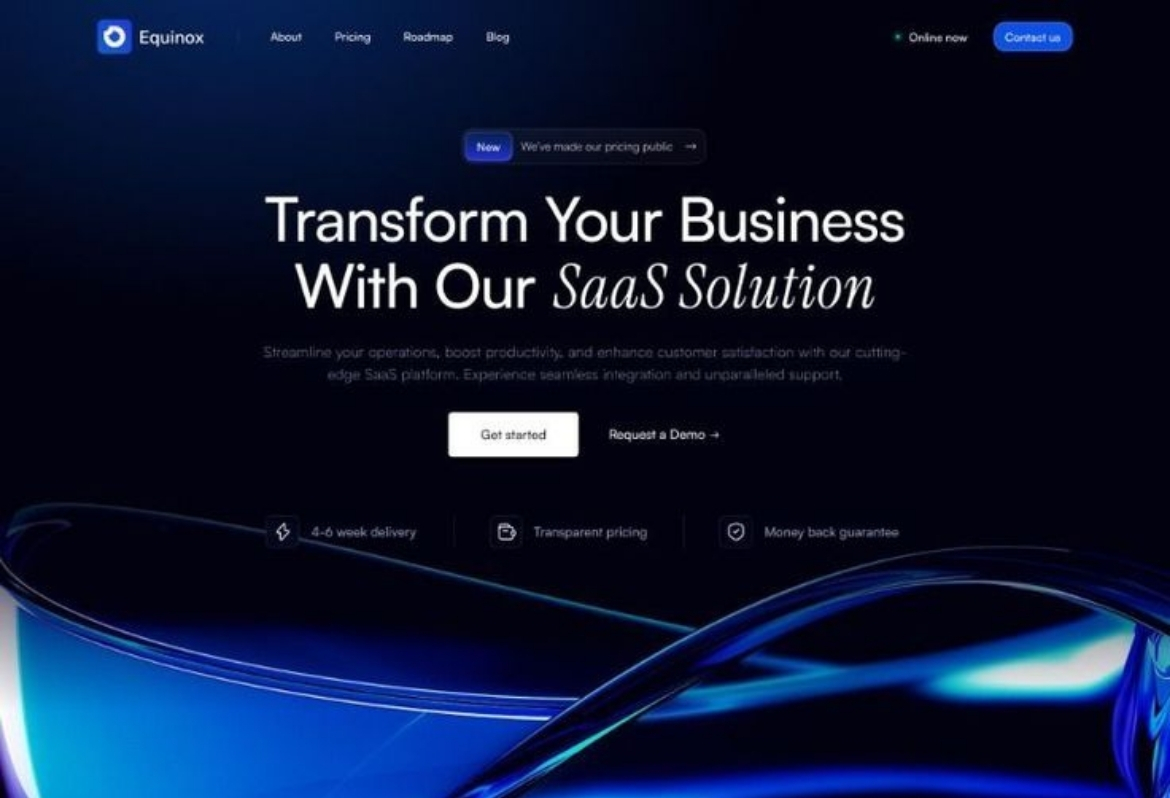
How a Modern Website Can Transform Your Brand in 2025
I still remember the first time I walked into Maya’s tiny bakery. She baked like an artist
croissants that folded sunlight into layers, yet her shop was hidden behind a faded awning and a
hand written card on a noticeboard. People who loved her pastries found her by accident. The
rest of the city never knew what it was missing.
A year later, Maya emailed me a screenshot: an elegant homepage, warm portraits, simple
online ordering, and customer notes glowing with gratitude. Her weekend queues doubled. A
local food critic shared a story. She hired an assistant. Everything changed not because her
baking improved overnight, but because her website finally told her story in a way the world
could understand.
That is what a modern website does. It becomes the voice, the storefront, and the hand that
reaches out to hold a customer’s trust. In 2025, a website is not just a URL; it is the backbone of
brand transformation.
Why a modern website design matters more than ever
We live in a moment where attention is the new currency. The first touchpoint between your
audience and your brand is very often digital. A modern website design is the handshake, the
eye contact, and the welcome note all wrapped in pixels.
● First impressions are instantaneous. Users form opinions in 50 milliseconds. Design,
speed, and clarity decide whether they stay.
● Trust is built through experience. A site that loads reliably, reads like a story, and
answers the user’s next question builds trust faster than any ad.
● Your brand is living online. From product pages to microcopy, the website is the single
source of truth for your tone, values, and promise.
What “modern” means in 2025 (and why it matters)
A “modern” website in 2025 blends art and engineering. It’s not about trendy animations or
buzzwords; it’s about building a human centered experience that scales.
Performance and speed
Pages render in the blink of an eye. Speed isn’t cosmetic it’s the bedrock of conversion. Faster
pages reduce bounce, increase trust, and improve search visibility.
Personalization without creepiness
Smart personalization gives people what they want before they know they want it recommended
products, content that matches their intent, saved carts. But it’s done ethically: privacy,
transparency, and user control are baked in.
Accessibility and inclusion
A modern website welcomes everyone. Accessible navigation, readable typography, and
thoughtful contrast are not optional features; they’re a moral and commercial imperative.
Content that breathes
Content is more than SEO keywords stuffed into paragraphs. Great content is story-driven,
emotionally intelligent, and solves a problem. It draws visitors into a narrative where your
product or service becomes the natural next step.
Trust signals and social proof
In 2025 customers expect transparent pricing, verified reviews, and clear policies. Your site
must make it easy to believe in you not by shouting, but by showing consistent, honest details
Now, YouTube creators and businesses alike benefit from sharing a mix of long and short content—all on one platform. The wide array of video marketing channels means that your strategy needs to be flexible. Each platform—whether it’s YouTube, Instagram, Facebook, LinkedIn, or your website—has its own best practices for video. Choosing to create either short-form videos or long-form videos isn’t really an option if you want your content strategy to be successful in 2023 and beyond. Both long-form and short-form videos have their place in your content plan. Keep reading to learn more about each type of video content and when you should use them for your business.
How a website drives brand transformation — examples that stick
Hypothetical: The local bakery (Maya)
Before: Hidden shop, inconsistent foot traffic.
After: A modern website with clear photos, an “order for pickup” flow, SEO rich local pages, and
a newsletter that tells short stories about seasonal pastries. Result: regulars doubled, wholesale
requests arrived, and Maya hired help.
Realistic SaaS scenario
Imagine a B2B SaaS company with an outdated pricing page. Prospects get lost. After a
redesign that includes simple pricing tiers, a calculator showing ROI, and case studies that
speak to specific industries, demo requests spike. The website moved the brand from “vague” to
“ready to buy.”
Personal brand — the coach
A life coach with powerful testimonials and a thin online presence revamped their site into a
resource hub: blog posts answering client questions, a free mini course gated for lead capture,
and clear pathways to book calls. Conversion increased, but more importantly, the brand’s voice
compassionate, direct, and hopeful aligned across every interaction.
Each example underscores how a modern website design moves a brand from obscurity to
clarity, from scatter to strategy.
“Just remember that you can test different video lengths until you find what works best –– the sweet spot. Pay attention to your video performance and adjust until you see success.”
SEO, storytelling, and the subtle art of discovery
SEO in 2025 is not a trick. It’s generosity. You help people find answers, and search engines
reward helpfulness.
- Keyword strategy: Use focus keywords (modern website design, brand transformation,
digital branding 2025, online growth) naturally in headings, meta tags, and early
paragraphs. But never force them.
- Structured content: H1, H2, and H3 headings help humans and machines navigate
your story.
- Helpful microcontent: FAQs, tooltips, and short explainers capture voice-search and
featured-snippet opportunities.
- Technical SEO: Fast load times, clean schema markup, sitemap hygiene — small fixes
that compound into higher visibility.
Story driven content paired with technical rigor is how discovery becomes relationship.
Measuring transformation: KPIs that actually tell you something Numbers without me
Numbers without meaning feel like noise. Here are KPIs that reflect real brand growth:
- Engagement rate: Time on page, scroll depth, and return visits tell you whether your
story is resonating.
- Conversion lift: Not just sales, but newsletter sign-ups, demo requests, and signposts
of interest.
- Brand sentiment: Reviews, social mentions, and direct customer feedback show
whether your brand’s identity is landing.
- Customer lifetime value: A longer term metric that shows whether your brand’s
promise translates into loyalty.
Watch for qualitative signals too: a heartfelt email, a user generated post, or a community that
forms around your content. Those are the real returns
Quick roadmap to transform your brand with a website in 2025
You don’t need a massive budget. You need clarity, craft, and momentum.
- Audit your current story. What does your homepage say about you? If a stranger
came across it, would they know what you do in 5 seconds?
- Prioritize trust essentials. Clear contact info, social proof, fast load times, and simple
navigation.
- Design for humans. Use visuals that reflect real customers. Write like a human. Break
long blocks of text with purposeful whitespace.
- Optimize content for intent. Map pages to user needs: learn, compare, buy, or
advocate.
- Measure and iterate. Choose 3 KPIs. Track them. Change one thing every two weeks
and watch patterns emerge.
Common myths — busted
- Myth: “I don’t need a website; social is enough.”
Social is noisy and rented land. Your website is your home permanent, searchable, and
yours.
- Myth: “Websites are only for big companies.”
The most powerful websites are the nimble ones small brands that tell a clear story and
move fast.
- Myth: “Designs need to be flashy.”
Flashy does not equal effective. Clarity, empathy, and utility do
A final word — the human reason to build better
A website can’t bake your croissants for you. It won’t replace the care in your work. But it will
make the world notice the care you already invest. It will turn accidental customers into
ambassadors. It will give your brand space to breathe, to explain, and to grow.
If you’re still thinking of your website as “that thing we’ll fix someday,” don’t wait. The most
meaningful transformations begin with small, deliberate choices a clearer headline, an honest
photo, a contact form that actually works.
I’ll leave you with this: people don’t remember product specs as much as they remember how a
brand made them feel. Build a website that makes them feel seen, understood, and invited. The
rest will follow.
Ready to transform your brand? Start by asking: What story do I want my website to tell and
who am I inviting in? If you want, I can help you map that story into pages, content, and actions
that spark real online growth